If You’ve Already Seen a Vet But Still Can’t Resolve Cat...
When Your Vet Says 'It’s Not Medical'—But Your Cat Still Acts Out
\nIf you've tried everything and still can't resolve cat behavioral issues veterinarian visits haven’t fixed—this isn’t failure on your part. It’s a systemic gap between veterinary medicine and feline behavior science. Nearly 68% of cats referred to behavior specialists have already undergone at least two full physical exams and bloodwork, yet their stress-related behaviors persist because underlying emotional needs, environmental triggers, and neurobiological drivers remain unaddressed. Cats don’t ‘misbehave’—they communicate distress through actions we misinterpret as defiance. And when veterinarians aren’t trained in ethology (the science of animal behavior), they rightly rule out illness—but rarely pivot to the next critical layer: behavioral diagnostics.
\n\nWhy Standard Vet Visits Often Stop Short
\nBoard-certified veterinary behaviorists represent less than 0.02% of all practicing veterinarians in the U.S. That means over 99% of general practice vets—no matter how compassionate or skilled—are not formally trained to assess feline anxiety gradients, social stress thresholds, or the neuroendocrine impact of chronic low-grade stress. As Dr. Marci Koski, certified feline behavior consultant and founder of Feline Behavior Solutions, explains: “A clean CBC and normal kidney values tell us the cat isn’t dying—but they say nothing about whether the cat feels chronically unsafe in its own home.”
\nThis isn’t criticism—it’s context. General practitioners excel at diagnosing UTIs, hyperthyroidism, and dental disease. But when a cat pees outside the box *after* those are ruled out, the answer isn’t ‘just get another litter box.’ It’s understanding that feline elimination behavior is governed by a triad: safety perception, substrate preference, and territorial control—and all three must be assessed individually.
\nConsider Luna, a 4-year-old spayed domestic shorthair. Her owner brought her to three different vets over eight months. Bloodwork, urinalysis, and abdominal ultrasound were all normal. Yet Luna began spraying vertical surfaces near windows after a neighborhood stray started patrolling the backyard. Her vet prescribed a mild anti-anxiety supplement—but never asked about window access, outdoor threats, or whether Luna had ever used that specific wall before. Within 72 hours of installing opaque window film and adding a high-value perch *away* from the window, spraying stopped. No medication. No retraining. Just ecological intervention.
\n\nThe 5-Step Behavioral Triage You Should Do *Before* Your Next Vet Appointment
\nDon’t wait for your next visit to start solving this. Use this evidence-based triage framework—developed from clinical protocols used by the American College of Veterinary Behaviorists—to isolate root causes faster:
\n- \n
- Map the ‘When & Where’: Log every incident for 7 days—not just what happened, but time of day, lighting, household activity (e.g., kids home from school), proximity to windows/doors, and who was present. Patterns emerge in timing more often than in action. \n
- Rule Out Micro-Pain: Even subtle discomfort alters behavior. Ask your vet specifically about: dental resorption (visible only on dental X-rays), early-stage osteoarthritis (especially in hips and elbows—common in cats over 3), and interstitial cystitis (a stress-induced bladder condition that rarely shows in standard urinalysis). \n
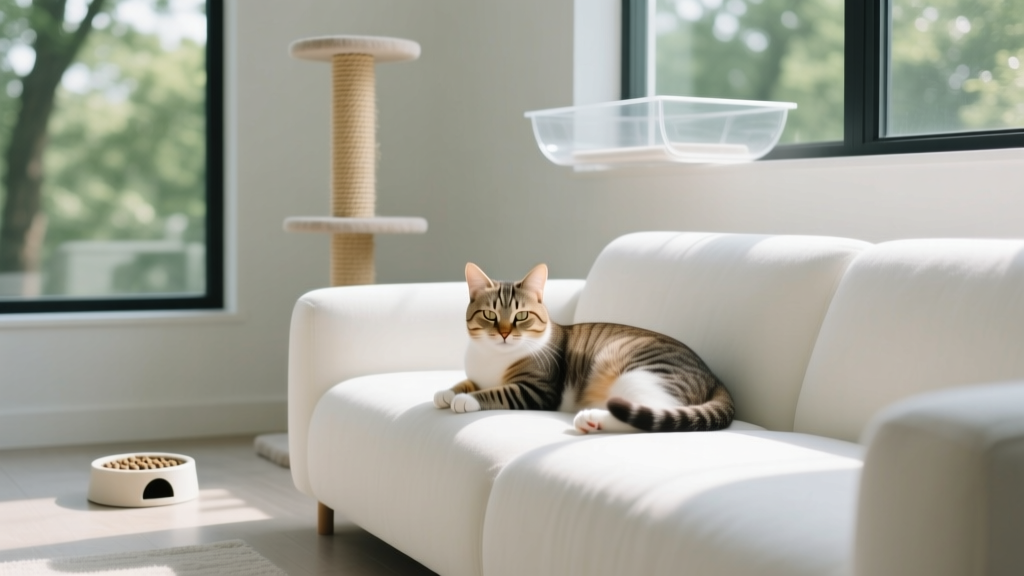
- Assess Resource Distribution: Are food, water, litter boxes, resting spots, and escape routes distributed according to the ‘1+1 Rule’? (One resource per cat, plus one extra—and no resource placed in high-traffic or dead-end zones.) \n
- Identify Social Stressors: Is there tension between cats? Does one cat block access to resources? Has there been recent change (new pet, baby, furniture rearrangement, visitor frequency)? Note: Cats show social stress through displacement grooming, over-vocalization at night, or sudden alopecia—not always overt fighting. \n
- Test Environmental Enrichment Response: Introduce one targeted enrichment element for 5 days (e.g., vertical space for a ground-dwelling cat; puzzle feeders for a food-motivated cat; timed play sessions with wand toys). Track behavior changes objectively—not just ‘seems calmer,’ but ‘zero incidents of scratching couch’ or ‘used window perch 3x/day.’ \n
What a Certified Feline Behaviorist Actually Does (That Your Vet Doesn’t)
\nA board-certified veterinary behaviorist holds dual credentials: DVM + residency training in animal behavior. A certified cat behavior consultant (CCBC or IAABC-CFBC) completes 300+ hours of supervised fieldwork, case study review, and ethics training—but doesn’t prescribe meds. Both fill critical gaps your general vet can’t:
\n- \n
- Functional Behavior Assessment (FBA): They observe your cat *in your home* (or via video audit) to identify antecedents (what happens right before), behavior (exact topography—not just ‘aggression’ but ‘ear flattening → tail lashing → lunging with open mouth’), and consequences (what the cat gains/avoids). This is how they distinguish fear-based aggression from play overstimulation. \n
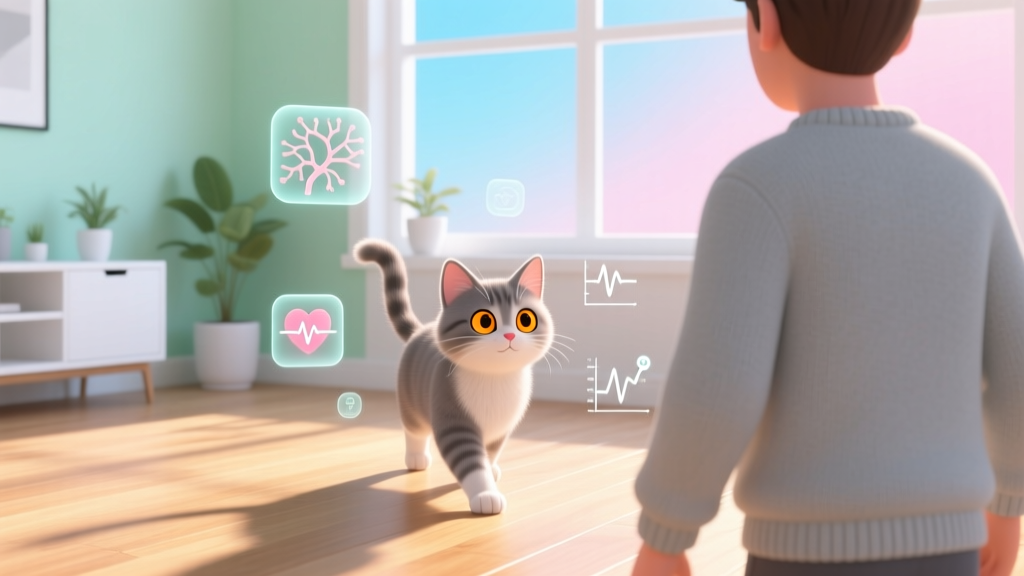
- Stress Gradient Mapping: Using validated tools like the Feline Stress Score (FSS) and Cat Stress Score (CSS), they quantify baseline anxiety—not just ‘seems nervous,’ but assigns a score from 1–5 across 12 physiological and behavioral markers (pupil dilation, ear position, vocalization type, etc.). \n
- Environmental Prescription: Unlike generic ‘add more toys,’ they design species-specific habitat interventions: e.g., ‘Install 3-level vertical pathway from sofa to bookshelf to ceiling-mounted shelf, with fleece-lined ledges and visual barriers every 18 inches’—not because it looks cute, but because it reduces ambush risk and increases perceived control. \n
In a 2023 multi-clinic study published in Journal of Feline Medicine and Surgery, cats whose owners worked with certified behavior consultants saw 73% reduction in target behaviors within 6 weeks—compared to 31% for those relying solely on vet-prescribed anxiolytics and basic advice.
\n\nWhen Medication *Is* Necessary—and How to Use It Correctly
\nMedication isn’t a ‘last resort’—it’s a tool, like insulin for diabetes. But it’s chronically misapplied in feline behavior cases. According to Dr. Ilona Rodan, co-author of Understanding Behavior in Cats and former director of the Cat Care Clinic in Wisconsin: “We don’t medicate cats to fix behavior—we medicate to lower the stress threshold so learning and environmental change can take hold.”
\nKey principles:
\n- \n
- Never use medication without concurrent behavior modification. SSRIs like fluoxetine require 4–6 weeks to reach therapeutic blood levels—and during that time, the environment must be actively reshaped. \n
- Start low, go slow—and monitor for paradoxical effects. Some cats on gabapentin become *more* reactive before calming. Video-record daily for subtle shifts: increased blinking, slower tail movement, willingness to accept chin scritches. \n
- Know the exit strategy. Tapering must be gradual (minimum 8–12 weeks) and tied to functional milestones—not calendar dates. If your cat consistently uses the new litter box *and* allows handling near the litter area *before* medication reduction begins, you’re on track. \n
| Intervention Type | \nBest For | \nTime to First Measurable Change | \nRisk of Rebound/Relapse | \nRequires Professional Oversight? | \n
|---|---|---|---|---|
| Environmental Restructuring (e.g., resource redistribution, vertical space, safe zones) | \nCats with clear environmental triggers (window stress, resource guarding, lack of escape routes) | \n24–72 hours (immediate reduction in vigilance behaviors) | \nLow—if sustained consistently | \nNo (but behaviorist assessment optimizes design) | \n
| Positive Reinforcement Training (e.g., targeting, recall, cooperative care) | \nCats with approach-avoidance conflict (e.g., hides during nail trims but accepts treats) | \n3–10 days (depends on reinforcement history) | \nModerate (requires ongoing maintenance) | \nYes (for complex cases; DIY works for basics) | \n
| Pharmacotherapy (SSRIs, TCAs, benzodiazepines) | \nCats with severe, generalized anxiety or self-injury (e.g., excessive licking causing ulceration) | \n3–6 weeks (therapeutic plateau) | \nHigh if tapered too fast or without behavior support | \nYes (prescription + monitoring required) | \n
| Pheromone Therapy (Feliway Optimum, Sentry Calming Collar) | \nMild-to-moderate situational stress (e.g., car travel, vet visits, new furniture) | \n3–7 days (optimal diffusion requires 24hr pre-exposure) | \nNone (no physiological dependency) | \nNo (OTC, but efficacy varies by product formulation) | \n
Frequently Asked Questions
\nCan a regular vet prescribe behavior medication—or do I need a specialist?
\nAny licensed veterinarian can prescribe FDA-approved or off-label behavior medications (e.g., fluoxetine, clomipramine, gabapentin). However, board-certified veterinary behaviorists are uniquely trained to select the right drug, dose, duration, and tapering protocol—and crucially, to pair it with precise behavior modification. A 2022 AVMA survey found that 82% of general practitioners rely on outdated dosing charts; behaviorists use pharmacokinetic modeling tailored to feline metabolism.
\nMy cat is fine at the vet but acts out at home—does that mean it’s ‘just bad behavior’?
\nNo—it strongly suggests the issue is environmental or social, not medical. Cats are masters of suppression: they’ll freeze, shut down, or mask stress in unfamiliar settings (like clinics) but release pent-up tension at home where they feel ‘safe enough to fall apart.’ This is why home video assessments are far more diagnostic than clinic observations.
\nWill getting another cat ‘fix’ my current cat’s aggression or anxiety?
\nAlmost never—and often makes it worse. Introducing a second cat without careful, species-appropriate integration (which takes 3–6 months minimum) is the #1 cause of acute-onset aggression in previously peaceful cats. The ASPCA reports 41% of cats surrendered for ‘aggression’ had a new cat introduced within 90 days prior.
\nAre online behavior consultants worth it—or should I only see someone in person?
\nHigh-quality remote consultants (IAABC- or CCPDT-certified) are exceptionally effective for most cases—especially with video analysis. In-home visits are essential only for complex multi-cat households or severe resource-guarding where spatial dynamics must be physically mapped. A 2021 University of Lincoln study found teleconsultations achieved 89% of the outcomes of in-person visits for single-cat households.
\nHow do I know if my cat’s behavior is ‘normal stress’ vs. clinical anxiety?
\nLook for the ‘3 Rs’: Routine disruption (sleep/wake cycles shift), Repetition (same behavior occurs daily at same time/place), and Resistance (cat won’t engage in previously enjoyed activities—even high-value treats fail). If two or more Rs are present for >2 weeks, clinical intervention is warranted.
\nCommon Myths About Cat Behavior
\nMyth #1: “Cats don’t need companionship—they’re solitary animals.”
While cats aren’t pack animals like dogs, they evolved from colonial ancestors (Felis lybica) and form fluid, resource-based social groups in the wild. Domestic cats living alone in homes with insufficient environmental stimulation show elevated cortisol levels—proven via non-invasive fecal testing—comparable to shelter-housed cats.
Myth #2: “If it’s not medical, it’s willful disobedience—and I need to discipline them.”
Discipline (yelling, spraying water, tapping the nose) increases fear and erodes trust. It teaches the cat that *you* are unpredictable and unsafe—not that the behavior is ‘wrong.’ Positive reinforcement and environmental design are the only evidence-based approaches for lasting change.
Related Topics (Internal Link Suggestions)
\n- \n
- Feline Stress Score Assessment Guide — suggested anchor text: "how to measure your cat's stress level" \n
- Multi-Cat Household Resource Calculator — suggested anchor text: "how many litter boxes do I really need" \n
- DIY Cat Tree Safety Standards — suggested anchor text: "building safe vertical space for cats" \n
- Food Puzzle Feeder Comparison Chart — suggested anchor text: "best slow feeder toys for anxious cats" \n
- When to Call a Veterinary Behaviorist — suggested anchor text: "signs your cat needs a behavior specialist" \n
Your Next Step Isn’t Another Vet Visit—It’s a Behavior Audit
\nYou’ve already done the hardest part: recognizing that something’s wrong and seeking help. Now, shift from diagnosis mode to solution mode. Download our free 7-Day Feline Behavior Audit Kit—includes printable logs, a room-by-room environmental checklist, and a 15-minute video walkthrough on spotting micro-stress signals (like half-blinked eyes or rapid whisker twitching). This isn’t about fixing your cat. It’s about redesigning a world where your cat doesn’t need to ‘act out’ to be heard. Start tonight: sit quietly for 10 minutes and watch—not what your cat does, but what makes them pause, flick an ear, or retreat. That’s where your real breakthrough begins.